
Sequential Thinking MCP for Complex Problem Decomposition
Complex problems resist straightforward solutions. A production bug might involve race conditions across three services, configuration drift in deployment, and subtle edge cases in business logic. An architecture decision might require weighing performance against maintainability, current constraints against future scale, and team expertise against ideal technology choices. These problems do not yield to single-shot reasoning.
The Sequential Thinking MCP server provides a structured framework for breaking down complex problems into explicit reasoning chains. Rather than attempting to solve everything at once, it enables Claude to think through problems step by step, branch into alternative approaches, revise earlier conclusions when new information emerges, and ultimately converge on well-reasoned solutions.
This article explores how Sequential Thinking transforms complex problem-solving within Claude Code workflows, from configuration and core concepts to practical applications in debugging, architecture decisions, and research tasks.
What is Sequential Thinking?
Sequential Thinking is a Model Context Protocol (MCP) server that exposes a single, powerful tool: sequentialthinking. This tool provides a framework for dynamic, reflective problem-solving through explicit thought chains.
Unlike standard prompting where the AI generates a complete response, Sequential Thinking forces each reasoning step to be explicit, numbered, and interconnected. The process supports:
- Linear progression: Building understanding step by step
- Branching: Exploring alternative approaches from any decision point
- Revision: Reconsidering and correcting earlier conclusions
- Hypothesis testing: Generating solutions and verifying them against the reasoning chain
- Dynamic adjustment: Expanding or contracting the thought chain as needed
The tool models how experienced engineers actually think through difficult problems: not in a straight line from problem to solution, but through exploration, backtracking, and refinement.
Configuring the Sequential Thinking server
Add the Sequential Thinking MCP server to your Claude Code configuration:
{ "mcpServers": { "sequential-thinking": { "command": "npx", "args": ["-y", "@modelcontextprotocol/server-sequential-thinking"] } }}The server requires no additional configuration or environment variables. Once configured, Claude Code gains access to the sequentialthinking tool, which it can invoke during problem-solving sessions.
📝 Note: The Sequential Thinking server runs locally and requires Node.js. The
-yflag auto-confirms the npx package installation.
The thought chain model
Each invocation of the sequentialthinking tool represents a single thought in a reasoning chain. The tool accepts several parameters that define how thoughts relate to each other:
| Parameter | Type | Purpose |
|---|---|---|
thought | string | The current reasoning step content |
thoughtNumber | integer | Position in the sequence (1, 2, 3…) |
totalThoughts | integer | Estimated total thoughts needed |
nextThoughtNeeded | boolean | Whether more reasoning is required |
isRevision | boolean | Whether this thought revises previous thinking |
revisesThought | integer | Which thought number is being reconsidered |
branchFromThought | integer | Branching point for alternative exploration |
branchId | string | Identifier for the current branch |
needsMoreThoughts | boolean | Signal that initial estimate was too low |
This structure enables sophisticated reasoning patterns:
Thought 1: Analyze the problem statement │Thought 2: Identify key constraints │Thought 3: Generate hypothesis A ─────┬─── Branch B: Alternative approach │ │Thought 4: Test hypothesis A Thought 4B: Explore alternative │ │Thought 5: [Revision of Thought 3] Thought 5B: Evaluate tradeoffs │ │Thought 6: Refined solution ◀─────────┘ (Merge insights) │Thought 7: Verification │ConclusionThe model allows for non-linear exploration while maintaining a coherent audit trail of the reasoning process.
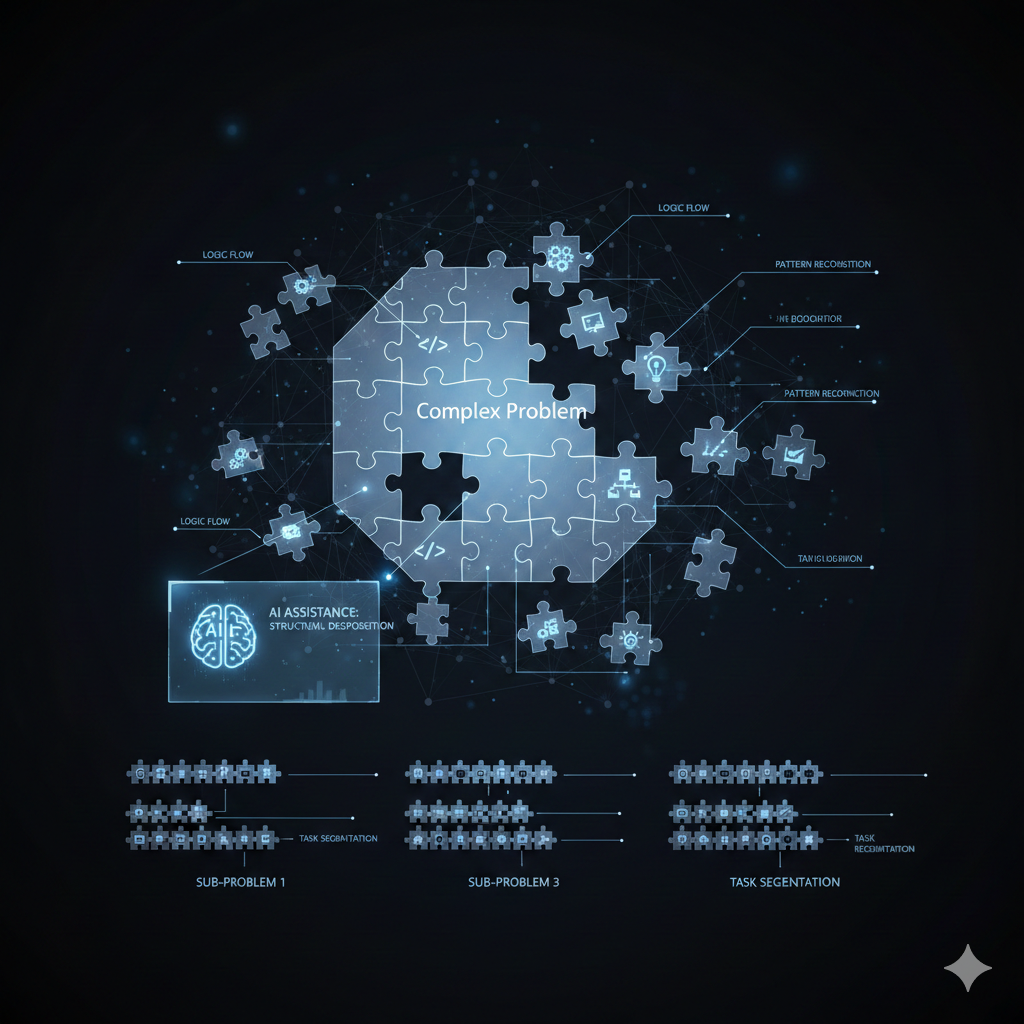
When to use Sequential Thinking
Sequential Thinking shines in scenarios where intuitive, single-pass reasoning fails.
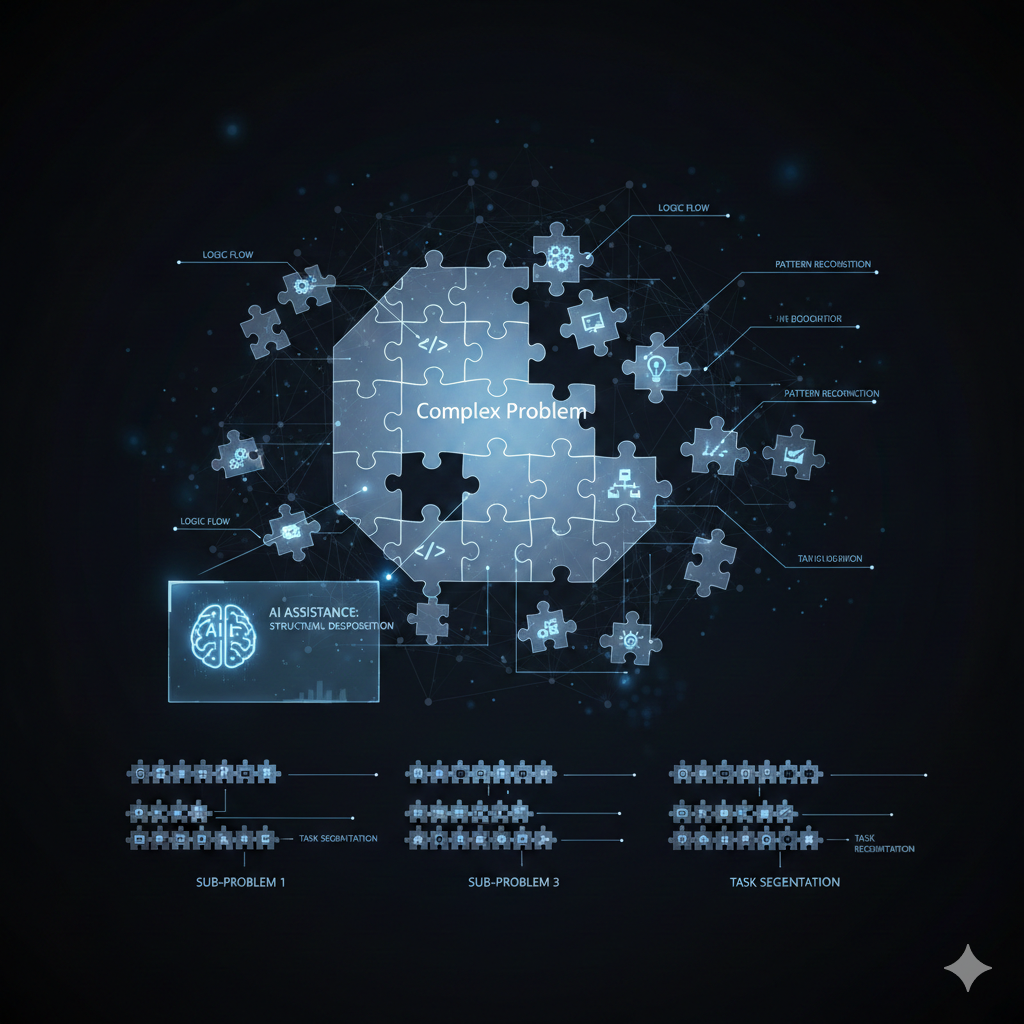
Complex debugging
Production bugs often involve multiple interacting systems. Sequential Thinking helps by:
- Systematically enumerating possible causes
- Evaluating evidence for and against each hypothesis
- Branching to explore promising leads
- Revising conclusions when initial assumptions prove wrong
# Claude invokes sequential thinking for a race condition bug
# Thought 1: "The bug manifests as intermittent 500 errors on the# /api/orders endpoint. Need to analyze: request handling, database# transactions, and external service calls."
# Thought 2: "Logs show the error occurs during payment processing.# The payment service response sometimes arrives after the database# transaction timeout."
# Thought 3: "Hypothesis: The payment webhook races with the order# completion transaction. If webhook arrives first, it tries to update# an order that doesn't exist yet."
# Thought 4 (Branch A): "Verify by checking webhook timestamps against# order creation timestamps in production logs."
# Thought 4 (Branch B): "Alternative hypothesis: Database connection# pool exhaustion under load causes random transaction failures."
# Thought 5: "Evidence strongly supports Branch A. Webhook arrives# 50-200ms before order row is committed in 73% of failure cases."
# Thought 6 (Revision of 3): "Root cause confirmed: webhook handler# lacks retry logic for missing orders. Solution: implement idempotent# webhook processing with retry on 404."
Architecture decisions
Architectural choices have long-term consequences. Sequential Thinking structures the evaluation:
- Define requirements and constraints
- Enumerate candidate approaches
- Branch to analyze each option’s tradeoffs
- Compare against requirements
- Document the decision rationale
This process creates an auditable record of why a particular architecture was chosen, invaluable when revisiting decisions months later.
Research and analysis
When exploring unfamiliar domains, Sequential Thinking prevents premature conclusions:
- Map the knowledge landscape
- Identify key questions
- Research each question systematically
- Revise understanding as new information emerges
- Synthesize findings into coherent conclusions
Practical integration with Claude Code
Sequential Thinking integrates naturally with Claude Code’s workflow. Here is a typical session tackling a complex refactoring task:
claude "Our payment module has grown to 3000 lines with multipleresponsibilities. Use sequential thinking to analyze the moduleand propose a decomposition strategy."Claude responds by invoking the Sequential Thinking tool multiple times:
# Claude automatically calls the sequentialthinking tool
# First thought: scope the problemmcp__sequential_thinking__sequentialthinking(    thought="Analyzing payment_module.py structure. Key responsibilities "            "I can identify: payment processing, refund handling, webhook "            "management, transaction logging, and report generation. These "            "appear to have different change frequencies and dependencies.",    thoughtNumber=1,    totalThoughts=8,    nextThoughtNeeded=True)
# Second thought: identify couplingmcp__sequential_thinking__sequentialthinking(    thought="Examining dependencies between responsibilities. Payment "            "processing and refund handling share transaction state. "            "Webhook management is mostly independent. Report generation "            "reads from all other modules. This suggests a dependency graph "            "with reporting as a consumer and webhooks as an island.",    thoughtNumber=2,    totalThoughts=8,    nextThoughtNeeded=True)
# Third thought: branch into decomposition strategiesmcp__sequential_thinking__sequentialthinking(    thought="Two decomposition strategies emerge: (A) Split by responsibility "            "into 5 modules with shared transaction layer, (B) Split by change "            "frequency - stable core with volatile extensions. Need to evaluate "            "both against our deployment constraints.",    thoughtNumber=3,    totalThoughts=8,    nextThoughtNeeded=True,    branchFromThought=3,    branchId="strategy-evaluation")
The explicit reasoning chain helps Claude maintain focus across complex multi-step analyses while providing visibility into its problem-solving process.
Thought persistence and retrieval
The Sequential Thinking server maintains thought history within a session, enabling references to earlier reasoning. This persistence supports several powerful patterns:
Building on prior analysis: Later thoughts can explicitly reference earlier conclusions without restating them.
Tracking revisions: When Thought 7 revises Thought 3, the connection is explicit in the reasoning chain.
Branch comparison: After exploring multiple branches, Claude can compare their conclusions to select the best approach.
💡 Pro Tip: For decisions you want to preserve across sessions, combine Sequential Thinking with the Neo4j Memory MCP server. Use Sequential Thinking for the reasoning process, then store the final conclusions and key branch decisions in persistent memory.
# After Sequential Thinking reaches a conclusionmemory_store( content="Payment module decomposition decision: Strategy A selected - " "split by responsibility into PaymentProcessor, RefundHandler, " "WebhookManager, TransactionLogger, and ReportGenerator modules.", context="architecture-decisions", tags=["payment", "refactoring", "module-decomposition"], reasoning_summary="Evaluated against deployment constraints. Strategy B " "(split by change frequency) rejected due to tight " "coupling between core payment and refund logic.")This combination provides structured reasoning during problem-solving and persistent context for future sessions.
Best practices for effective prompting
Sequential Thinking is a tool that Claude invokes autonomously, but your prompts influence how effectively it reasons.
Be explicit about complexity
Signal when a problem warrants structured reasoning:
# Good: Signals complexity"Use sequential thinking to analyze why our test suite takes45 minutes when it used to take 10 minutes."
# Less effective: Might not trigger deep analysis"Why are our tests slow?"
Request specific reasoning patterns
Guide Claude toward useful thought structures:
# Request branching analysis"Analyze three different caching strategies for our API.Use sequential thinking to branch and compare each approach."
# Request hypothesis testing"Debug the memory leak in our worker process. Form hypothesesand systematically test each against the available evidence."
# Request revision-friendly exploration"Research GraphQL vs REST for our new microservice. Be willingto revise initial conclusions as you consider more factors."
Provide sufficient context
Sequential Thinking works best with concrete information:
# Provide specifics"Our PostgreSQL queries are timing out. The slow query log showsthese three queries taking >5s each: [query details]. Hardwareis a db.r5.2xlarge with 64GB RAM. Use sequential thinking todiagnose the root cause."Allow for iteration
Complex problems rarely resolve in one session:
# First session: Analysis"Use sequential thinking to analyze our authentication flowand identify security weaknesses."
# Follow-up session: Deep dive on findings"In your previous analysis, you identified token refresh asa concern. Use sequential thinking to explore mitigations."
A complete debugging example
Here is a full example demonstrating Sequential Thinking applied to a real debugging scenario:
# User prompt: "Our API returns stale data for about 30 seconds after# updates. Use sequential thinking to diagnose and fix this."
# Thought 1/6: Problem scoping# "Stale data suggests caching at some layer. Candidates: browser cache,# CDN cache, application cache (Redis), database replica lag, or ORM# query cache. Need to identify which layer."
# Thought 2/6: Evidence gathering# "User reports indicate staleness across different browsers and devices,# ruling out browser cache. Our CDN (CloudFront) is configured with# 60-second TTL, but staleness is ~30 seconds. Checking Redis TTL."
# Thought 3/6: Hypothesis formation# "Redis cache TTL is 30 seconds, matching the staleness duration.# Hypothesis: Updates write to database but don't invalidate Redis cache.# The 30-second staleness corresponds to cache expiry."
# Thought 4/6: Hypothesis verification# "Examining update endpoint code. Confirmed: save_to_database() is called# but cache.invalidate() is not. The cache eventually expires but isn't# proactively cleared on updates."
# Thought 5/6: Solution design# "Two fix options: (A) Add cache invalidation after database writes,# (B) Use write-through caching. Option A is simpler and matches our# read-heavy workload. Implementing cache.invalidate(key) after saves."
# Thought 6/6: Verification and conclusion# "Fix implemented: added cache invalidation to update_entity() function.# Tested: updates now reflect immediately. Root cause was missing cache# invalidation, not cache configuration. No changes needed to TTL."
# nextThoughtNeeded: False - problem solved
The structured approach prevented jumping to conclusions (like changing TTL) and systematically narrowed to the actual root cause.
Conclusion
Sequential Thinking transforms how AI assistants approach complex problems. By making reasoning explicit, supporting branching and revision, and maintaining thought history, it enables deeper analysis than single-pass prompting allows.
Key takeaways:
- Sequential Thinking is an MCP server that structures problem-solving into explicit thought chains
- The thought model supports linear progression, branching into alternatives, and revision of earlier conclusions
- Best use cases include complex debugging, architecture decisions, and research requiring iterative refinement
- Integration with Claude Code is straightforward and requires no additional configuration
- Effective prompting signals complexity, provides context, and allows for iteration
- Combining with persistent memory captures conclusions for future sessions
The power of Sequential Thinking lies not in making Claude smarter, but in making its reasoning visible and structured. When you can see each step of the analysis, you can guide it more effectively, catch errors earlier, and build confidence in the conclusions.
For problems that resist intuitive solutions, Sequential Thinking is not optional. It is how complex problems actually get solved.